What Makes a Great AI & Technology Logo?
Designing a logo for an AI or technology company isn’t just about slapping a futuristic font on a circuit board graphic. It’s about capturing the essence of innovation while ensuring the brand feels accessible to its audience. A great AI logo must communicate intelligence, forward-thinking, and trust—often to a diverse crowd ranging from tech-savvy developers to everyday consumers. Over my 20 years in design, I’ve seen tech branding evolve, and the principles for AI logos in 2026 are sharper than ever.
First, clarity is non-negotiable. AI is a complex field, and your logo shouldn’t add to the confusion. It needs to be instantly recognizable, whether it’s on a website header or a tiny app icon. This means avoiding overly intricate designs that lose impact at small scales. Think about how the logo will live across digital platforms—AI companies thrive online, so scalability and adaptability are key.
Second, a great AI logo often hints at the technology without being literal. You don’t need a robot or a brain in every design. Subtle nods to data, connectivity, or intelligence—like abstract nodes, grids, or geometric shapes—can suggest the field without screaming it. The best logos evoke curiosity, making viewers think about what the company does rather than spelling it out.
Third, trust is a massive factor. AI can intimidate people—think privacy concerns or sci-fi fears of machines taking over. Your logo needs to soften that edge with a human touch. This can be through rounded shapes, approachable typography, or warm color accents. A cold, sterile design might push users away, while a balanced logo builds confidence in the brand.
Finally, versatility matters. AI companies often pivot—today’s chatbot startup might be tomorrow’s robotics leader. A great logo isn’t tied to one niche; it’s flexible enough to grow with the brand. This means a strong core identity that isn’t overly trend-driven. Timelessness, paired with a modern edge, ensures the logo won’t need a redesign in two years when the next AI hype cycle hits.
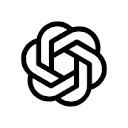
 The OpenAI logo is a masterclass in minimalist elegance. Its hexagonal shape, formed by interconnected lines, suggests a neural network or data structure without being overt. The deep teal color exudes trust and sophistication, while the clean sans-serif wordmark ensures readability. It’s a logo that feels both cutting-edge and accessible—perfect for a company democratizing AI.
 Anthropic’s logo uses a stylized ‘A’ that feels like a nod to circuitry or pathways, hinting at AI’s problem-solving nature. The soft purple tone breaks from the typical tech blue, suggesting creativity and a human focus—key for a company emphasizing safe AI. The simplicity ensures it works across scales, from app icons to billboards.
 DeepMind’s logo is bold with its interconnected ‘D’ and ‘M,’ resembling a brain or network. The vibrant blue and green palette balances trust with innovation, while the rounded edges make it approachable. It’s a design that screams intelligence while remaining visually striking—a great fit for a research-driven AI brand.
 Hugging Face takes a playful approach with its emoji-like icon—a rarity in AI branding. This friendly face paired with a warm orange tone instantly humanizes the tech, aligning with their mission of open-source accessibility. It’s a risky move that pays off by making AI feel approachable and fun.
 Stability AI’s logo uses a geometric ‘S’ that feels like a data grid or pixelated form, tying directly to their work in generative AI. The teal and black combo feels modern and reliable, while the sharp design conveys precision. It’s a logo that stands out for its subtle creativity in a crowded space.